 Reviews

 Proudly American

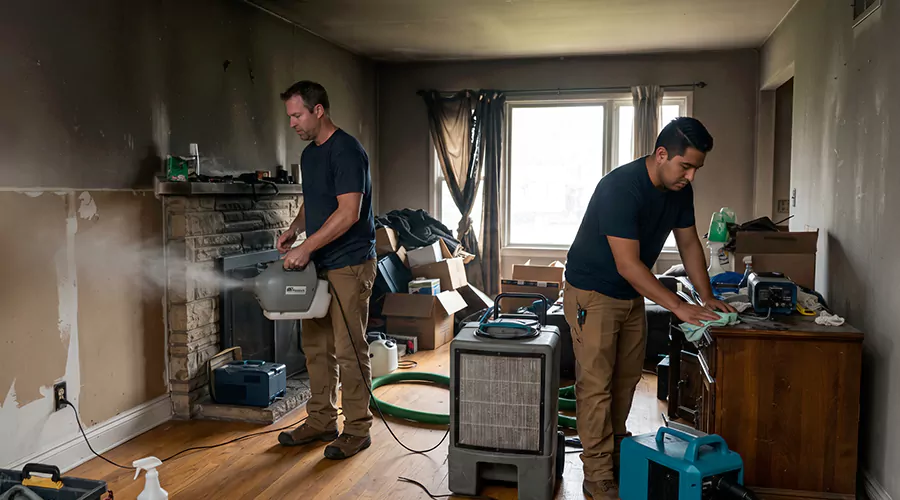
To remove smoke odor after a fire, first remove soot and other smoke residue from affected surfaces before washing hard materials or laundering washable fabrics. Ventilation can help after the outdoor air is safe, but air fresheners alone won't remove odor that remains trapped in insulation or other porous materials. Professional smoke and water damage restoration can help address lingering odors and residue when fire damage affects multiple materials.
Smoke can travel far beyond the room where the fire started. Odor may remain inside cabinets or fabrics after visible soot is gone, so successful fire smoke odor removal depends on finding and cleaning every affected material.
Why Does Smoke Odor Stay in a Home?
Smoke odor persists because microscopic particles settle on surfaces and can penetrate absorbent materials throughout the property. Upholstery or unfinished wood can hold odors below the surface. Insulation can also retain smoke long after walls appear clean, which is why ventilation alone may provide only temporary improvement.
Common odor-holding materials include:
- Carpet and padding
- Upholstered furniture
- Curtains and bedding
- Unfinished wood
- Insulation
- Clothing
- Cabinets
- HVAC filters
Smoke damage cleaning works best when the residue itself is removed before deodorizing products are considered.
What Should You Do Before Removing Smoke Odor?
Before cleaning, wait until fire authorities say the property is safe to enter. Document visible damage and avoid touching soot unnecessarily because it smears easily. Loose residue can leave oily marks when hands or cleaning cloths press it deeper into painted surfaces.
Start with these steps:
- Confirm that the home is safe to enter.
- Photograph affected rooms.
- Identify where visible soot is present.
- Separate clean belongings from smoky items.
- Check for water left from firefighting.
- Wear gloves during cleanup.
- Begin with loose residue removal.
A common mistake is trying to cover the smell before completing smoke damage clean up. Fragrance can change the odor temporarily while the original contamination remains.
How Do You Remove Smoke Odor Step by Step?
Smoke odor removal should follow a source-first process. Remove loose soot before washing hard surfaces. Launder washable fabrics separately and allow cleaned surfaces to dry fully. Only after the residue has been removed should you judge whether additional odor treatment is needed.
1. Remove Loose Soot
Use appropriate vacuum equipment to collect loose residue without dragging the nozzle across delicate surfaces. Avoid rubbing soot with a damp cloth before loose particles have been removed. Wetting dry soot too early can create darker staining.
2. Clean Hard Surfaces
Wash suitable hard surfaces with mild soap or detergent. Work in small sections and rinse when the cleaning product requires it. The Red Cross recommends cleaning walls in small areas and allowing cleaned surfaces to dry thoroughly before repainting.
3. Wash Smoke-Affected Fabrics
Washable clothing or bedding may require repeated cycles because smoke odor can remain after the first wash. Follow the fabric manufacturer's care instructions and check the item before drying it permanently. Kitchen fire smoke odor removal may require special attention to curtains or fabric furniture near the cooking area because oily smoke can settle on soft materials.
4. Ventilate When Outdoor Conditions Are Safe
Fresh-air ventilation can help after the fire is out and outside air quality is suitable. Open windows when conditions allow and move indoor air outward. Do not bring outdoor smoke into the home during an active wildfire event. EPA guidance recommends keeping windows closed when outdoor smoke levels remain high.
5. Check Hidden Odor Sources
If the smell returns after the house has been closed for several hours, inspect areas that are easy to overlook.
These can include:
- Cabinet interiors
- Closets
- Attic insulation
- Carpet padding
- Upholstered furniture
- HVAC filters
Persistent odor often means the source has not been fully removed.
Which Materials Can Usually Be Cleaned?
Hard surfaces are generally easier to deodorize because smoke residue stays closer to the exterior. Porous materials can absorb odor deeper into their structure, so cleaning the surface may improve appearance without removing the smell completely.
| Material | Typical Approach |
|---|---|
| Glass and tile | Wash after loose residue removal |
| Painted walls | Remove soot then clean carefully |
| Finished wood | Test cleaner before wider use |
| Clothing | Launder according to care label |
| Upholstery | Check whether odor reaches padding |
| Carpet | Inspect carpet and padding separately |
| Insulation | Evaluate if odor remains trapped |
Fire damage smoke odor removal can become more difficult when insulation or soft furnishings hold contamination below an accessible surface.
What Warning Signs Mean Smoke Odor Is Still Present?
Smoke contamination is probably still present when odor returns after ventilation or becomes stronger when cabinets and rooms have been closed. Recurring residue near air registers can also indicate that smoke reached parts of the home that weren't included in the first cleaning.
Watch for these signs:
- Smoke smell returns overnight.
- Cabinets smell stronger when opened.
- Upholstery smells after surface cleaning.
- Carpet odor returns in humid conditions.
- Soot remains around vents.
- Walls still transfer dark residue.
- Clothing smells after washing.
- Attic spaces retain strong odor.
- Odor appears when the HVAC runs.
- Newly cleaned rooms smell smoky again.
These symptoms suggest that smoke remediation may need to address a deeper source.
What Can You Check Yourself?
A closed-room odor test can help identify whether smoke residue remains after cleaning. Ventilate the room first when outdoor conditions are safe. Close the windows afterward and leave the room shut for several hours before returning.
Then check:
- Whether the odor has returned.
- Which part of the room smells strongest.
- Whether cabinets hold more odor than walls.
- Whether fabric items smell when handled.
- Whether the HVAC changes the odor level.
This simple test cannot identify hidden contamination inside walls, but it can help narrow down the remaining source.
When Should You Call a Professional?
Professional help becomes appropriate when heavy smoke affects several rooms or odor continues after repeated source cleaning. HVAC contamination and smoke-filled insulation can also require methods that are difficult to perform with ordinary household equipment.
Consider professional assessment when:
- Heavy soot covers several rooms.
- Smoke entered HVAC components.
- Insulation retains odor.
- Upholstery cannot be cleaned successfully.
- Odor returns after repeated cleaning.
- Firefighting water damaged wall cavities.
- Structural fire damage is present.
- The odor source cannot be located.
Smoke restoration may involve deeper cleaning followed by controlled deodorization after the contaminated material has been addressed. Avoid using devices that intentionally generate ozone as a casual DIY odor solution. EPA guidance states that ozone is a harmful air pollutant and recommends mechanical filtration methods that do not generate it.
How Can You Keep Smoke Odor From Returning?
Smoke odor is less likely to return when all residue sources are cleaned before walls are painted or damaged materials are covered. Replacing heavily contaminated filters can also prevent trapped particles from circulating through the property again.
Use these steps:
- Clean soot before repainting.
- Wash reusable fabrics before storing them.
- Check cabinet interiors for residue.
- Inspect HVAC filters after smoke exposure.
- Keep smoky belongings away from clean rooms.
- Dry any firefighting water completely.
- Recheck enclosed rooms for returning odor.
Fire restoration smoke odor removal should focus on the source rather than masking the smell with fragrance.
Conclusion
Smoke odor after a fire usually disappears only when soot and contaminated materials are cleaned thoroughly. Start with dry residue removal before washing suitable surfaces, then address fabrics and hidden odor sources. Ventilation can help when outside air is safe, but it cannot replace source cleaning. If odor keeps returning after repeated cleaning, professional evaluation can help locate contamination that remains out of sight.
Frequently Asked Questions
Will smoke odor eventually disappear on its own?
Some odor can fade over time, but persistent contamination may continue releasing smoke smell until the affected material is cleaned or removed.
Can you paint over smoke odor?
Painting alone is not a good first step. Remove soot and clean the wall before applying a suitable primer to a fully dry surface.
Does washing clothing remove fire smoke odor?
Often, but some fabrics require more than one wash cycle. Always follow the item's care instructions.
Can an air purifier remove smoke smell after a fire?
High-efficiency filtration can reduce airborne smoke particles. It cannot remove residue trapped inside walls or furniture.
Why does the smoke smell return at night?
Closed rooms can allow odor released from contaminated materials to build up again. This often reveals a source that needs further cleaning.
Should HVAC filters be replaced after a fire?
A smoke-loaded filter should be checked and replaced when dirty. Smoke around vents can also indicate that the system needs closer evaluation.